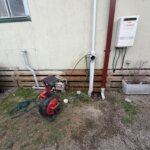



Project Details
| Service Provided | CCTV drain inspection, hydro jetting & permanent no-dig CIPP drain relining |
| Duration | Planned no-dig repair — CCTV diagnosis January 2026, permanent CIPP reline completed early 2026 |
| Location | Aireys Inlet, Surf Coast |
| Property Type | Residential beach house — slab-on-ground home on a bush block |
| Urgency Level | Medium — ongoing blockages, planned diagnosis and permanent repair |
| Discharge | Legal Point of Discharge confirmed — direct connection |
EQUIPMENT & TECHNOLOGY USED
- CCTV drain camera with on-screen distance metering and 33kHz locating sonde
- High-pressure water jetter (hydro jetting)
- Mechanical descaling equipment
- Cured-in-place pipe (CIPP) relining gear with regulated curing pressure
MATERIALS SUPPLIED
- CIPP liner and resin
- Associated relining consumables
COMPLIANCE, TESTING & DOCUMENTATION
- Works completed with regard to relevant Victorian plumbing requirements and AS/NZS 3500 where applicable
- Pre- and post-works CCTV footage recorded
- Property service located and mapped; Legal Point of Discharge confirmed
- Water authority / council plans sourced
- Photo and written job report provided to the client
About the Job
On the Surf Coast, the homes with the best bush and ocean outlook are often the ones with the trickiest drainage. When a sewer line runs beneath a polished concrete slab, a single failed joint can stay hidden for years — until the drain keeps blocking.
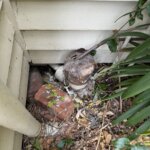
That’s what a beach-house owner near Aireys Inlet had been living with: ongoing blockages in an architectural, slab-on-ground home on a sloping bush block, with the sewer running under the finished floor and out beneath an elevated deck. With no easy access and the line buried under the slab, every blockage was disruptive — and a real problem when the house was being used by family or guests. The owner had seen our recent work on other Surf Coast jobs and knew we run a local depot in Anglesea with Surf Coast Master Plumbers on call 24/7, so they called us in for a proper CCTV diagnosis and a permanent fix. Left alone, the line risked repeat blockages, a sewage backup inside the home, and eventually breaking up that polished slab to reach the pipe.
What We Found
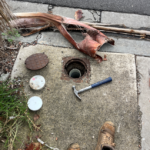
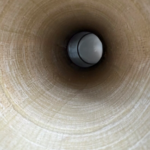
We accessed the sewer through the existing inspection opening at the bottom of the stack and ran our CCTV drain camera, using on-screen distance metering and a 33kHz locating sonde to map the line as it travelled beneath the slab. We then cleared the drain with high-pressure water jetting and a descale, and repeated the CCTV to read the true condition of the pipe.
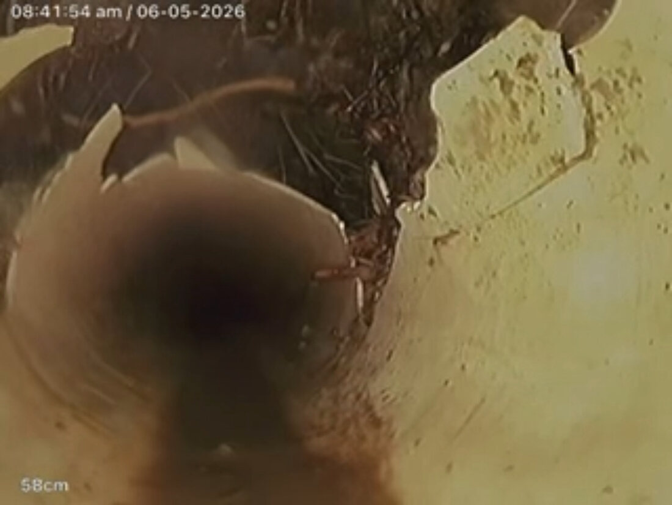
The footage showed the cause clearly. When the home was built, the sewer had been damaged during construction and repaired under the slab using a PlumbQuik push-fit coupling. That joint had since failed — leaving an offset in the line with a lip of around 10 mm and an open gap. Tree roots had found the gap and grown straight into the pipe, and that root mass under the slab was what kept choking the drain. CCTV tracked the failure downstream of the inspection opening, with damage located at roughly 3 m and again around 20 m along the run.
In coastal, bush-block suburbs like Aireys Inlet, Fairhaven and Anglesea, this pattern is common: slab-on-ground homes built over push-fit drainage, surrounded by mature native trees, with ground movement that slowly works a joint loose. Once there’s a gap, roots do the rest.
Our Solution
The owner’s priority — and ours — was to fix the line without jackhammering the polished slab or lifting the deck. CCTV relining made that possible.
STEP 01 Make safe & access through the existing opening
We worked entirely through the inspection opening at the bottom of the stack, so the finished floor stayed intact and the home stayed liveable while we confirmed the scope.
STEP 02 Locate & map the service
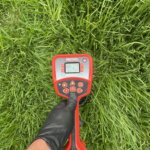
Using the camera’s distance metering and a 33kHz locating sonde, we mapped the sewer’s path under the slab and pinpointed the failure to the metre — so the no-dig repair was planned, not guessed.
STEP 03 High-pressure jet & descale
We hydro-jetted and descaled the run to cut out the root mass and debris, restoring the host pipe to a clean surface. A liner only lasts if it bonds to a properly prepared pipe.
STEP 04 Confirm with repeat CCTV
We re-ran the camera to verify the line was clear and confirm the exact position and extent of the failed joint before committing to the repair — the diagnosis-before-repair step that prevents surprises.
STEP 05 Wet out & install the CIPP liner
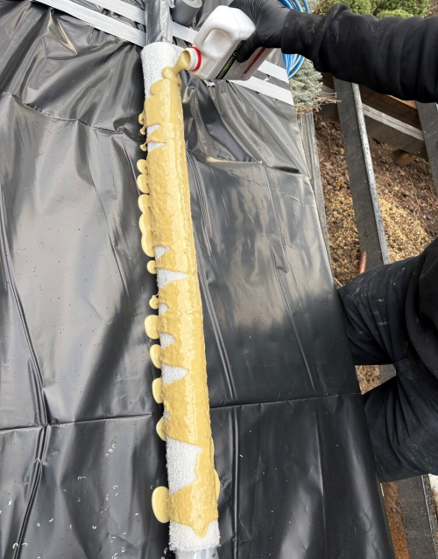
We saturated the liner with resin, positioned it over the failed section, and held it against the pipe wall under regulated pressure while it cured — sealing the offset and open joint from the inside, with no excavation.
STEP 06 Final CCTV & handover
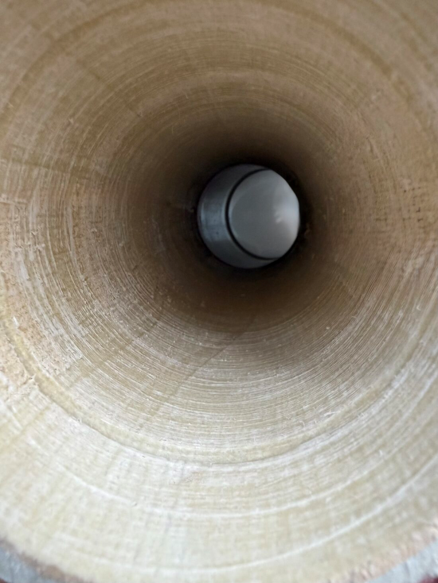
A final camera pass confirmed a smooth, sealed bore. We handed over the footage, photos and a written job report, so the owner has a permanent record of the repair.
The Outcome
The sewer was returned to full, free flow, and the repair was made without touching the polished slab or the deck. We verified the finished line with a final CCTV pass and gave the owner the before-and-after footage, site photos and a written job report. Because the service route and Legal Point of Discharge were located and mapped, and authority plans were sourced, the owner now has a clear record of where the line runs and how it was repaired.
Most importantly, the CIPP liner permanently seals the failed PlumbQuik joint from the inside, so the tree roots that caused the ongoing blockages have nothing left to grow into. For a beach house that isn’t occupied full-time, that peace of mind matters — it’s a permanent fix, not another temporary clear.
WE GET RESULTS
- CCTV with distance metering pinpointed the fault before any repair began
- Jetting & descaling removed the root mass and restored the host pipe
- Failed PlumbQuik joint permanently sealed with no-dig CIPP relining
- Polished slab and elevated deck left completely intact
- Service route & Legal Point of Discharge located, mapped and documented
- Owner handed before/after CCTV footage, photos and a written report
What Our Client Had to Say
Client feedback was not published for this project — but the job was completed with full CCTV documentation, testing and a clear written handover.
What This Means for Other Aireys Inlet Property Owners
If you own a slab-on-ground home or beach house around Aireys Inlet, Fairhaven, Anglesea or Moggs Creek, this one’s worth knowing: a lot of homes built in the last couple of decades use push-fit drainage couplings under the slab, and those joints can work loose over time — especially on bush blocks with reactive ground and mature trees nearby.
Watch for the early signs: drains that gurgle or clear slowly, a sluggish toilet, blockages that keep coming back after a clear, or a faint smell near the slab or yard. On their own they seem minor, but they’re often the first symptom of a failing joint and root intrusion.
The reason to act early is cost. A failed joint caught on CCTV can usually be sealed with no-dig relining. Left for a year or two, roots regrow, the pipe can collapse, and the only option left is excavating — or cutting up your floor — to reach it. With our depot in Anglesea and Surf Coast Master Plumbers on call 24/7, a CCTV inspection is the quickest, cheapest way to find out exactly what’s going on before it gets expensive.
Common Questions About Drain Relining in Aireys Inlet
Can a sewer pipe under a concrete slab be fixed without digging it up?
In most cases, yes. If the host pipe is structurally sound enough to hold a liner, we can repair it using cured-in-place (CIPP) relining — installed through an existing access point with no excavation. On this Aireys Inlet job, that’s exactly why relining was chosen: it permanently sealed a failed joint under a polished slab without cutting the floor or lifting the deck. We always confirm suitability with a CCTV inspection first, because not every pipe is a relining candidate.
Why do drain joints fail in newer homes?
Many homes built in recent decades use push-fit couplings on the under-slab drainage. They’re quick to install, but they can dislodge over time — particularly on reactive or sandy ground that moves, or where a section was repaired during construction and not fully bedded. Once a joint shifts and leaves a gap, tree roots are drawn to the moisture and grow straight in. That’s the pattern we see regularly on Surf Coast bush blocks.
Is pipe relining better than excavation on a bush block?
It usually is, when the pipe qualifies. Excavation on a sloping, vegetated block can mean lifting decks, removing established gardens and reinstating concrete — slow, disruptive and costly. Relining is trenchless, so it avoids most of that. The exception is a fully collapsed pipe or a defect that can’t be lined; after the CCTV inspection we’ll tell you straight which option actually suits your line.
Do I need a CCTV drain inspection before relining?
Yes — it’s essential. A camera inspection confirms where the fault is, how far along the line it sits, whether the host pipe can take a liner, and whether jetting is needed first. On this job, CCTV located the failed joint at roughly 3 m and 20 m downstream and confirmed the pipe was sound enough to reline. Without that inspection, any relining quote is guesswork — and you also get recorded before-and-after evidence of the repair.
Related Case Studies
- Blocked Sewer Drain Uncovers Hidden Root Intrusion in Bell Park — CCTV diagnosis traced a recurring blockage to tree roots inside an ageing sewer line.
- CCTV Inspection Uncovers Systemic Drain Failure Across a 3-Unit Complex in Newtown — Camera inspection revealed widespread drainage faults across a multi-unit property.
- A Blocked Toilet That Turned Out to Be a Full Main Sewer Blockage in Geelong West — What looked like a simple blocked toilet was traced to a failure in the main sewer.
Other Ways Bay Plumbing Can Help You
- Pipe Relining & Repairs
- CCTV Drain Inspections
- Drain Cleaning & Jetting
- Blocked Drains
- Emergency Plumbing
- Excavation & Earthworks
- Commercial Plumbing
- Residential Plumbing
Need No-Dig Drain Relining on the Surf Coast?
We’ve served Geelong, the Surf Coast, the Bellarine Peninsula and the City since 2007, with a depot in Anglesea and local Surf Coast Master Plumbers on call 24/7. Blocked drain, tree roots, or a failed joint under a slab — we’ve got the CCTV diagnostics and relining to fix it properly, often without digging.
Get A Free Quote · Call 1300 625 633